What actually happens during a professional facial, from someone who gives them
A client sat down in my chair last winter convinced she had oily skin. She’d been buying mattifying everything for a decade, stripping her face twice a day, fighting a shine that never went away. Ten minutes into reading her skin, the story flipped. She wasn’t oily. She was dehydrated, and her skin was overproducing oil to compensate for a barrier she’d been scrubbing raw. Everything she’d bought for years had made it worse. That moment, the one where the assumption breaks, is the part of a facial nobody tells you about.
Most people picture a facial as a spa indulgence: cucumber slices, soft music, a nap. The relaxation is real. The diagnostic work happening underneath it is what actually changes your skin, and it starts before a single product touches your face.
Read the skin first, treat it second
The opening of any serious facial is a proper assessment, not a glance. In the method I trained in, we look at the skin’s current state rather than slapping a label on it. Biologique Recherche built this idea into its whole approach with the concept of the “Skin Instant,” the recognition that your skin today is not your skin last month, and the treatment should respond to what’s in front of us right now. Dehydration, sensitivity, congestion, and aging shift with seasons, stress, hormones, and what you’ve been doing to your face at home.
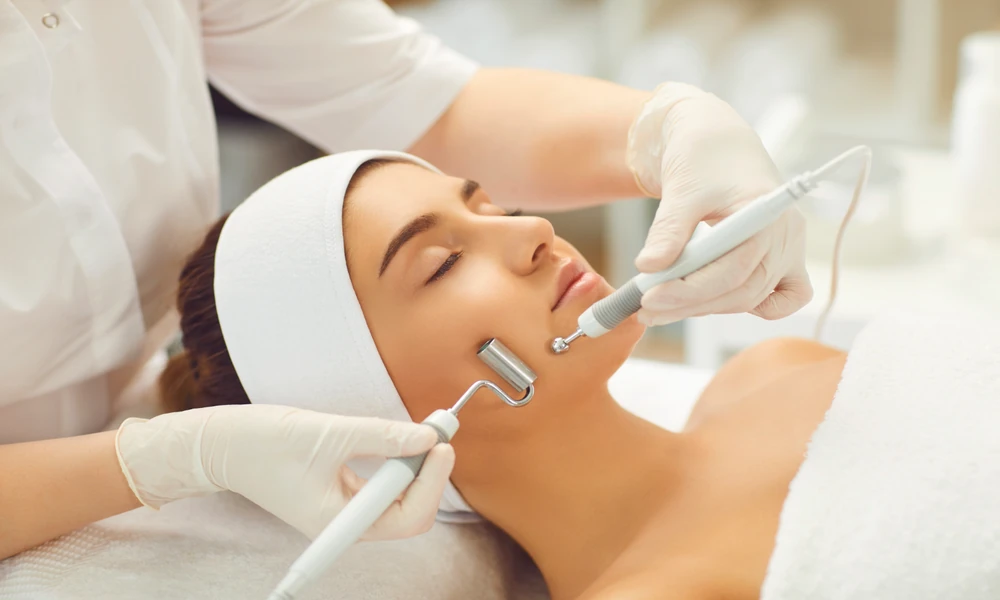
This is why the same client gets a different facial in January than in July, and why a one-size protocol is a red flag. When someone is weighing a professional facial treatment booking, the question that matters most isn’t which fancy device is involved. It’s whether the practitioner reads the skin and adjusts, or runs everyone through an identical script regardless of what they’re working with. A good facial is diagnosis first. The products are downstream of what we find.
Cleanse, then resurface
Once we know what we’re dealing with, the early steps clear the ground. A thorough double cleanse removes the day, the makeup, the sunscreen, the grime that home routines rush through. Then comes the step clients always remember, which in our world is Lotion P50.
P50 is an exfoliating lotion with a cult following, and the first time you feel it you understand why people are obsessive about it. It tingles. It works on the skin’s surface and its pH, lifting away dead cells and prepping everything underneath to absorb what follows. A short pause here. That tingle is the point. It tells you something active is happening, and a practitioner chooses the right formulation for your skin’s tolerance rather than going maximum strength on everyone.
Extract carefully, never aggressively
If your skin needs it, this is where congestion gets addressed. Extractions have a bad reputation, mostly earned by people doing them badly. Done right, with steam or warm compresses to soften the skin and proper technique, they clear blackheads and clogged pores without the bruising and broken capillaries that DIY squeezing leaves behind. Done wrong, they cause more damage than they fix. This single step is the strongest argument for seeing a professional rather than attacking your own face at the bathroom mirror.
Not every skin needs extractions, and a careful practitioner skips them when the skin is inflamed or reactive. Forcing the standard protocol onto skin that’s in no state for it is exactly the kind of mistake the assessment is meant to prevent.
Treat, mask, and finish for the day in front of you
The middle of the treatment is where the diagnosis pays off. Serums, massage, a mask matched to your current concern, all chosen for the Skin Instant we identified at the start. Facial massage isn’t filler. It moves lymph, eases the muscle tension that contributes to expression lines, and leaves the face looking less puffy and more awake. Clients often think the glow afterward is the products. A lot of it is circulation.
We finish with protection, always including sun care, because sending someone back into the world freshly exfoliated and unprotected would undo the work. The closing steps seal in the treatment and set up the days that follow.
Don’t panic if your skin reacts at first
One thing I always warn first-timers about: your skin might do something unexpected in the days after a deep facial, and it’s usually not a disaster. A purge of small breakouts can follow extractions and exfoliation, as congestion that was already forming works its way out faster than it otherwise would. Mild redness settles within hours. These are normal responses to a treatment that actually did something, not signs it went wrong.
What isn’t normal is lasting irritation, stinging that won’t fade, or a rash, and a good practitioner tells you the difference before you leave so you’re not guessing at home. We also dial intensity down for reactive skin precisely to avoid these outcomes. If you’ve ever had a facial that left you raw and inflamed for days, that wasn’t your skin being difficult. It was a protocol applied too aggressively for what your skin could handle that day.
Take the routine home, or the facial fades
The honest truth practitioners don’t always say out loud: a single facial is a reset, not a cure. The visible glow lasts days. The lasting change comes from what you do between appointments. The best part of the chair-side conversation is the prescription at the end, the short, specific routine built around what we found in your skin that day, with the order of application that makes each step count.
That client who thought she was oily walked out with a plan to rebuild her barrier instead of demolishing it. A few weeks later her “oily” skin had calmed down, because it was never the problem. The facial didn’t fix her. The diagnosis did, and the routine carried it forward.
What to actually look for
If you’re booking a treatment, judge it by the thinking, not the theatrics. A practitioner who assesses your skin properly, explains what they’re seeing, adjusts the protocol to match, and sends you home with a routine you understand is worth far more than a luxurious-sounding menu performed identically on every face. The candles and the warm towels are pleasant. The reading of your skin is the thing you’re really paying for, and it’s the difference between an hour of relaxation and a genuine change in how your skin behaves. Walk in curious, ask what they’re seeing, and you’ll get far more out of the chair than a nap.